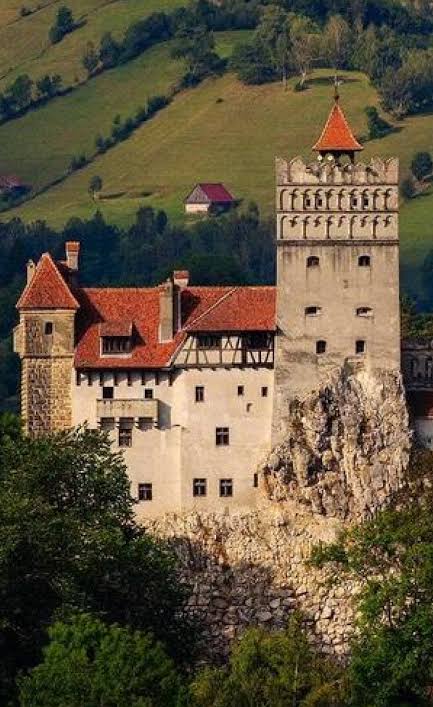
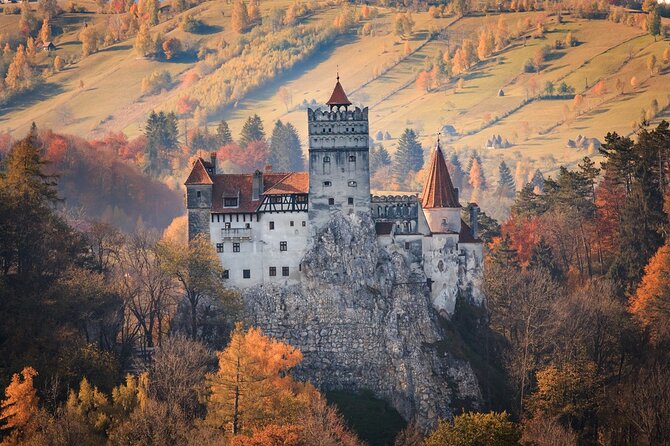
Forget coffins and cobwebs: the Bran Castle interior is, first and foremost, the preserved home of Queen Marie of Romania, who received the fortress in 1920 and turned a cold Saxon stronghold into a royal summer residence. What you walk through today is a museum of her furniture, art and daily life, layered over 14th-century military architecture — irregular rooms, walls thick enough to hide a staircase, and windows framing the Carpathian Mountains. The Dracula story has its place too, in dedicated exhibition rooms about Vlad the Impaler (Vlad Țepeș) and Bram Stoker's novel. This guide covers every part of the route so you know what you're looking at before you're funneled up the first narrow stair.
| Quick summary | Details |
|---|---|
| Rooms open to visitors | 57, spread over 4 levels connected by tight spiral and wooden stairs |
| Route type | Mostly one-way circuit; you can't easily backtrack against the flow |
| Time needed | 1.5–2 hours at a normal pace |
| Included in standard ticket | All museum rooms, secret staircase, courtyard — see tickets |
| Paid extras inside | Torture Chambers (20–30 lei), Time Tunnel (30 lei) |
| Photography | Allowed without flash; no tripods |
| Accessibility | Not wheelchair-accessible beyond the courtyard level |
How the Interior Is Laid Out
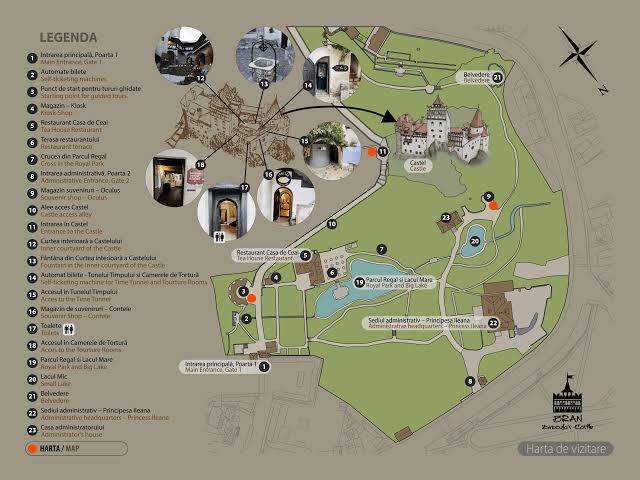
The castle was built between 1377 and 1388 by the Saxons of Brașov as a customs post and fortress guarding the pass between Transylvania and Wallachia — so it grew for defense, not comfort. Rooms stack irregularly over four levels around the inner courtyard, linked by staircases barely wide enough for one person. The visitor route runs as a broadly one-way loop: up through the ground-floor and first-floor royal rooms, higher into the towers and myth exhibitions, then back down to the courtyard. Signage is minimal, which is why first-timers often choose a guided ticket; the map below helps you keep your bearings.
Queen Marie's Royal Apartments
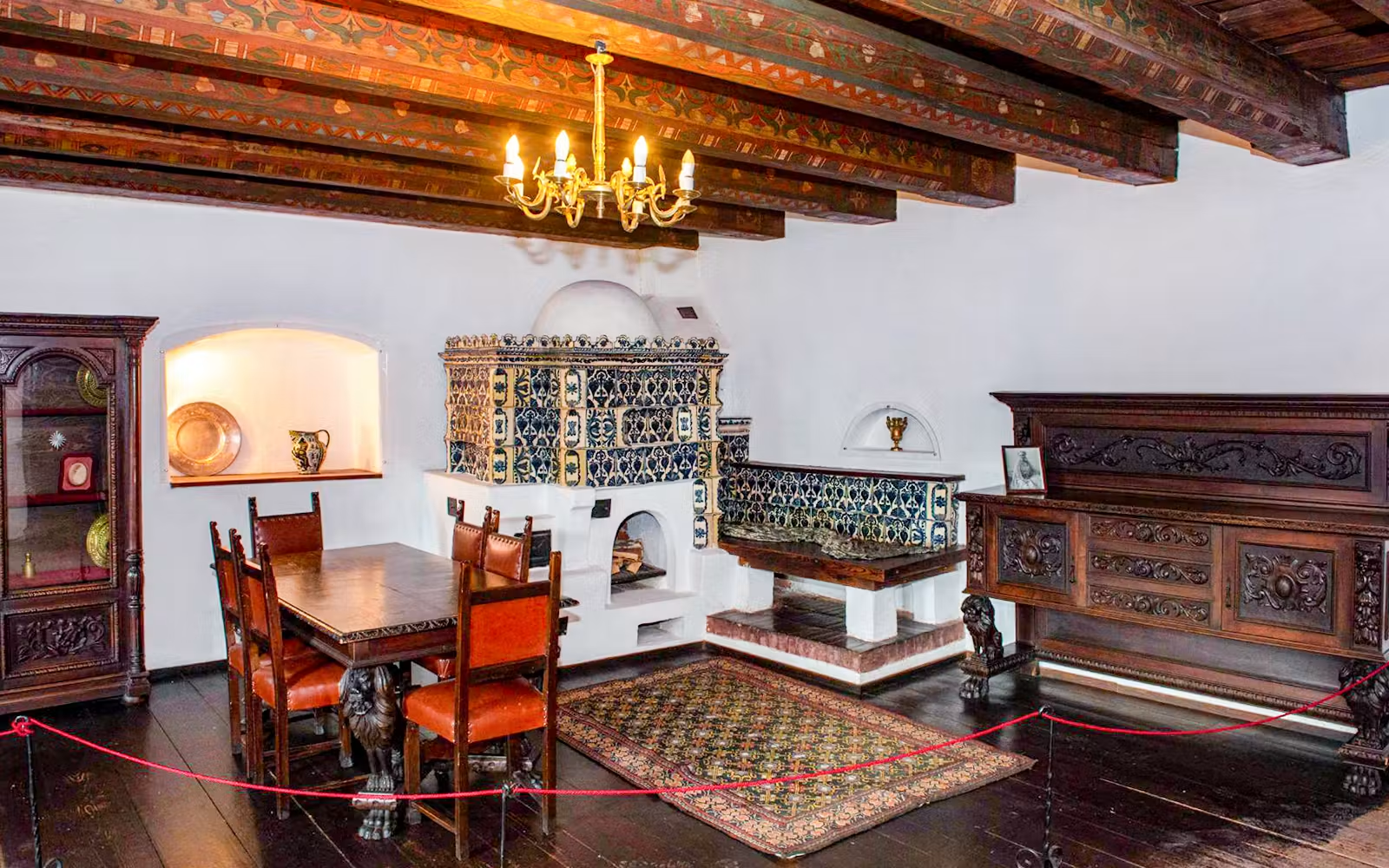
The emotional core of the interior. Queen Marie of Romania — British-born, wildly popular, and the driving personality behind Bran's 1920s golden age — furnished these rooms in her own eclectic taste: carved wooden furniture, Romanian folk textiles, Orthodox icons and Art Nouveau touches sitting comfortably inside medieval stone. Look for her bedroom and private salons on the lower floors, arranged much as she kept them. The apartments of her family, including pieces linked to Princess Ileana, continue the story; after the communist era and decades as a state museum, the castle was returned to the family's Habsburg heirs — Archduke Dominic — in 2009, and the current displays lean into that royal history.
The Music Salon
One of the most photographed rooms in the castle: a warm, low-ceilinged salon where the queen entertained, with period instruments and furniture from her collection. It captures what Bran really was in the 1920s — not a vampire's lair but a fashionable royal retreat above a mountain village.
The Secret Staircase
Between the first and third floors a concealed passage climbs inside the wall itself — a tight stone stairway once hidden behind a fireplace, rediscovered and opened to visitors. Walking it is the single most castle-like moment of the route: uneven steps, bare rock, and just enough headroom. It's also the point where queues form on busy days, since only a thin file of people fits at once. Arrive at opening and you may get it to yourself.
Weapons, Armor and the Medieval Rooms
Several rooms return the castle to its military origins: displays of swords, pole weapons, armor and hunting pieces that recall five centuries of garrisons watching the trade road below — the same corridor today's DN73 follows from Brașov. Combined with the towers' arrow slits and timber galleries, these rooms are the best place to read the building as a working fortress rather than a residence.
Book Bran Castle Interior Tickets
The Dracula Rooms: Vlad, Stoker and the Myth
The upper level tackles the question every visitor arrives with. Exhibition rooms separate the three strands of the story: the historical Vlad the Impaler, the 15th-century Wallachian ruler whose actual connection to Bran was fleeting at best; Bram Stoker, who never set foot in Transylvania but stitched his 1897 novel together from library research; and the pop-culture Dracula that eventually attached itself to this castle because it looked the part. It's an honest, well-made display — the castle explains the myth rather than pretending to be it. If the legends are your main interest, continue with our is Bran Castle haunted? page, which digs into strigoi folklore and the ghost-story record.
Paid Extras Inside the Grounds
- Torture Chambers (20–30 lei): a compact exhibition of medieval punishment instruments. Grim, briefly interesting, skippable if you've seen similar collections elsewhere.
- Time Tunnel (30 lei): a multimedia elevator ride through a shaft carved in the rock beneath the castle, reached from the courtyard well area — the most modern thing at Bran and a hit with kids. Full review on the Time Tunnel page.
- Royal Tour packages (190/230 lei): bundle both extras with priority entry — worth the math on peak days; see tickets and prices.
Practicalities: Stairs, Photos, Accessibility
- Stairs everywhere: the full route means four levels of narrow, sometimes steep steps, including spiral sections. Wear grippy shoes; leave large backpacks at your accommodation.
- Photography: allowed inside without flash. No tripods, no drones. The best interior light comes through the south-facing windows in late morning.
- Pace: allow 1.5–2 hours. The one-way flow means rushing groups behind you set the tempo in high season — another argument for a 9:00 arrival (opening hours).
- Climate: the interior is unheated stone. Comfortable in summer, genuinely cold from late autumn — bring a layer even when the village is mild.
The Bran Castle interior is not wheelchair-accessible and hard going for anyone with limited mobility: beyond the courtyard level, every part of the route involves stairs, and the secret staircase is a squeeze for broad-shouldered visitors. There is no elevator on the museum route (the Time Tunnel elevator is a separate attraction, not an accessibility route). Visitors with disabilities are admitted free per the official price list, but should plan around the courtyard and park rather than the upper floors.
Crowds cluster in the first royal rooms because everyone stops there fresh off the entrance. If you arrive mid-morning behind coach groups, move briskly through the first floor, enjoy the emptier upper myth rooms and towers, then linger in Queen Marie's apartments on your way down when the wave has passed.
Is the Interior Worth It?
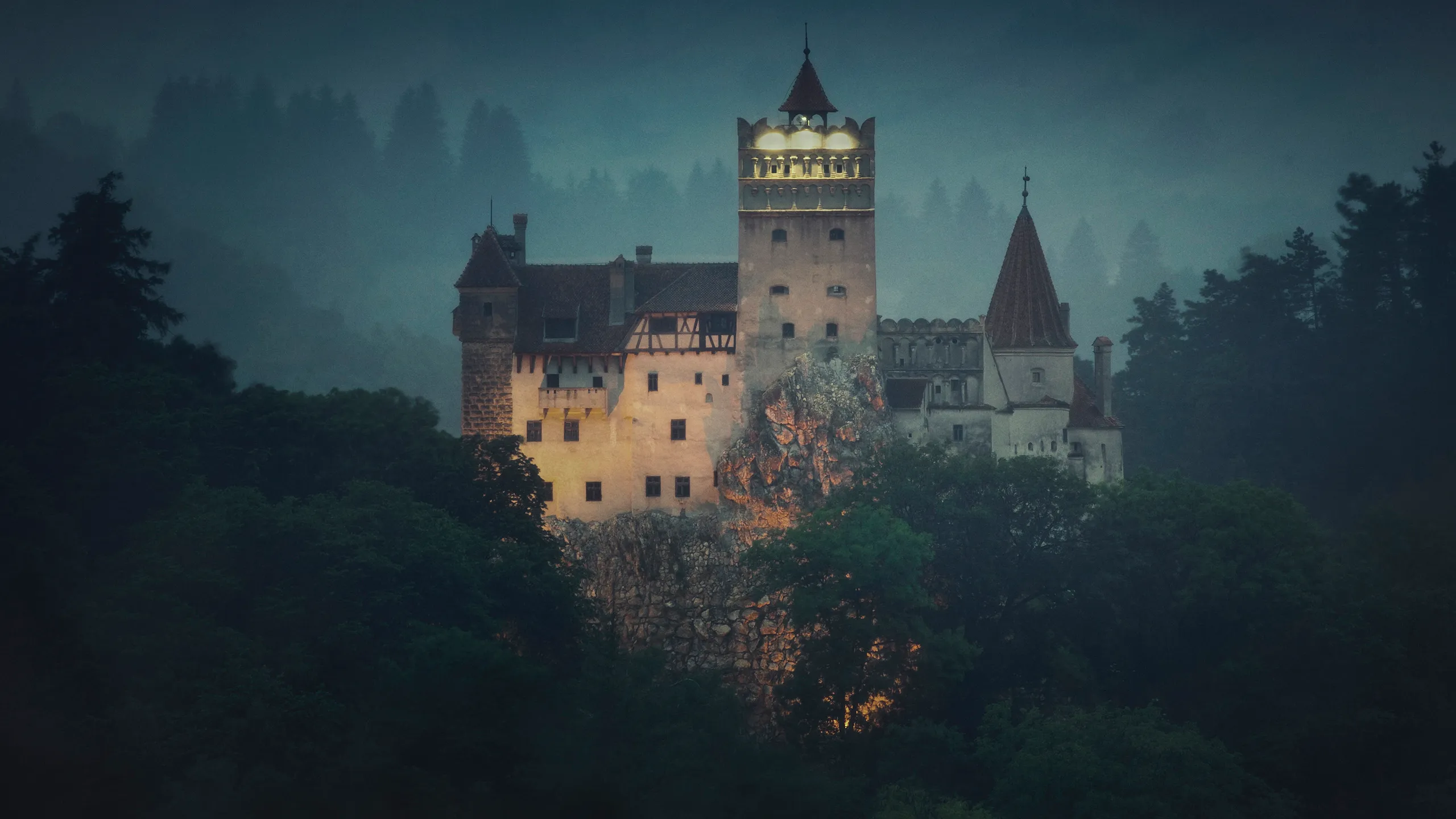
Yes — with calibrated expectations. Come for a compact, atmospheric medieval interior with genuine royal history and superb mountain views from the tower windows; don't come expecting Gothic horror sets. The furniture is real, the staircase is really hidden in a wall, and the Dracula rooms are smarter than they need to be. Pair the visit with the courtyard photo spots and, if you're staying nearby, the illuminated castle after dark — see Bran at night.
Bran Castle Interior — FAQ
What is inside Bran Castle?
57 museum rooms across four levels: Queen Marie of Romania's furnished royal apartments, a music salon, weapons and armor rooms, exhibition rooms on Vlad the Impaler and Bram Stoker's Dracula, a secret staircase hidden in the wall, and the inner courtyard with its famous well.
How many rooms does Bran Castle have?
The museum route covers 57 rooms spread over four levels, all included in the standard 120 lei admission. The Torture Chambers and Time Tunnel are separate paid additions.
Is there really a secret staircase in Bran Castle?
Yes — a narrow stone passage inside the wall connecting the first and third floors, once concealed behind a fireplace. It's on the standard visitor route and is one of the highlights of the interior.
How long does the Bran Castle interior take to visit?
1.5–2 hours for the full route at a normal pace, plus 20–30 minutes if you add the Time Tunnel or Torture Chambers. The route is essentially one-way, so you move with the flow.
Can you take photos inside Bran Castle?
Yes, without flash. Tripods and drones are not allowed. Late morning gives the best natural light through the south-facing windows.
Is the Bran Castle interior wheelchair-accessible?
No — beyond the courtyard level the route is all narrow stairs, including spiral and hidden-passage sections. Visitors with disabilities enter free per the official price list, but the upper floors are not realistically reachable with mobility equipment.
Are there Dracula exhibits inside Bran Castle?
Yes — dedicated rooms on the upper level explain the historical Vlad Țepeș, Bram Stoker's novel, and how the fictional count became attached to this castle. It's a factual exhibition, not a haunted-house attraction.
Is the inside of Bran Castle heated?
No — it's a medieval stone interior and stays cold outside summer. Bring a warm layer from October to April; see the winter guide for what to wear.
Prices, opening hours and visiting rules on this page are based on information published by the official Bran Castle website (bran-castle.com) and are provided for guidance only. They can change without notice — always verify current details on the official site before you travel. This website is an independent guide and is not the official ticket office.